 how-to
Simple Ways to Grow Your Fan Base as an Independent Artist
Updated 26 October 2026
A crowd can enjoy a performance and still forget the artist's name on the way home. Simple ways to grow your fan base start with closing that gap: make your name easy to remember, give people a clear next step and offer something worth returning for.
For a busker or independent musician, that might mean a readable artist sign, a profile with your strongest performance clip and a useful update about your next set. None guarantees growth. Together, they give interested listeners a practical way to become a returning audience.
1. Give people one clear place to find your work
Choose an artist name and use it consistently across your signs, profile and main social account. Someone who heard you on the street should be able to recognise the same artist online.
Your main profile should answer three questions quickly:
- Who are you? Use a clear photo and a short description of your act.
- What can someone hear or see? Put a strong, representative clip or song near the top.
- What happens next? Show a current gig date, a follow link or your latest release.
Remove outdated dates and check links on a phone. A long list of rarely used accounts creates more work for a new listener. Start with the destinations you actually keep current.
For a fuller checklist, see our guide to a professional artist link in bio.
2. Match each invitation to the right destination
Following an artist and supporting them financially are different actions. Label each link or QR code according to what opens.
Your invitation | Where it should lead |
|---|---|
Listen to my latest song | The song or release page |
Find my music and next gig | Your current artist profile |
Follow for more performances | The social account you maintain |
Scan to support | Your support checkout |
Get occasional gig updates | A clearly explained, voluntary mailing-list sign-up |
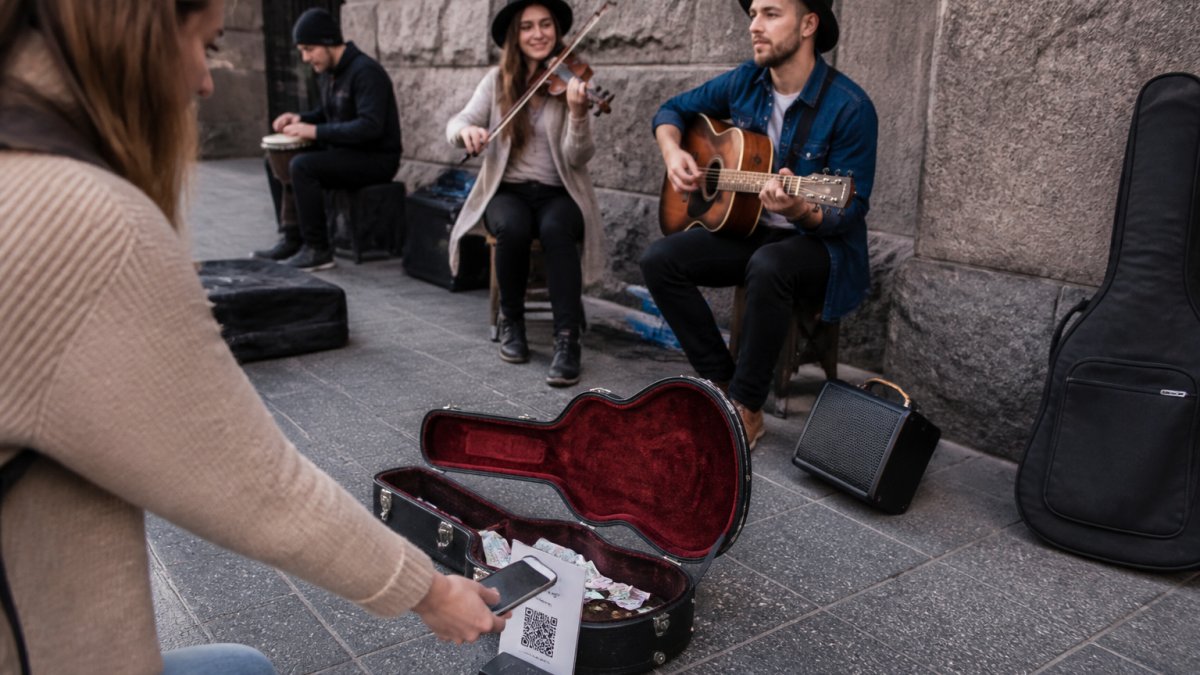
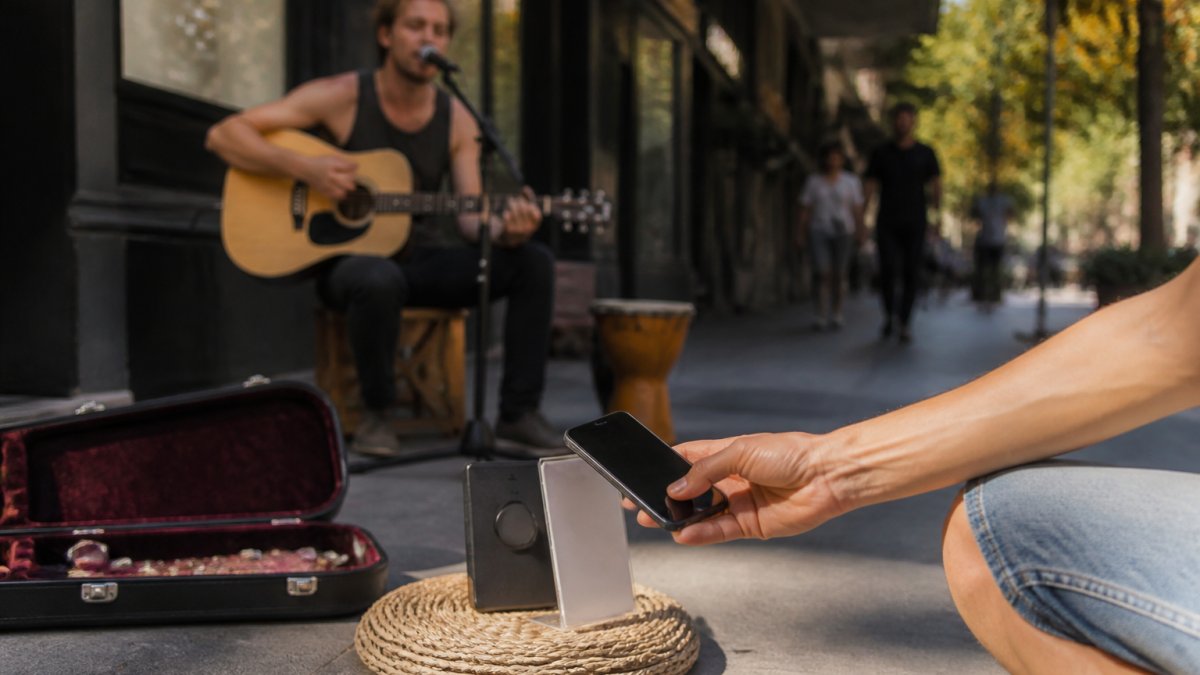
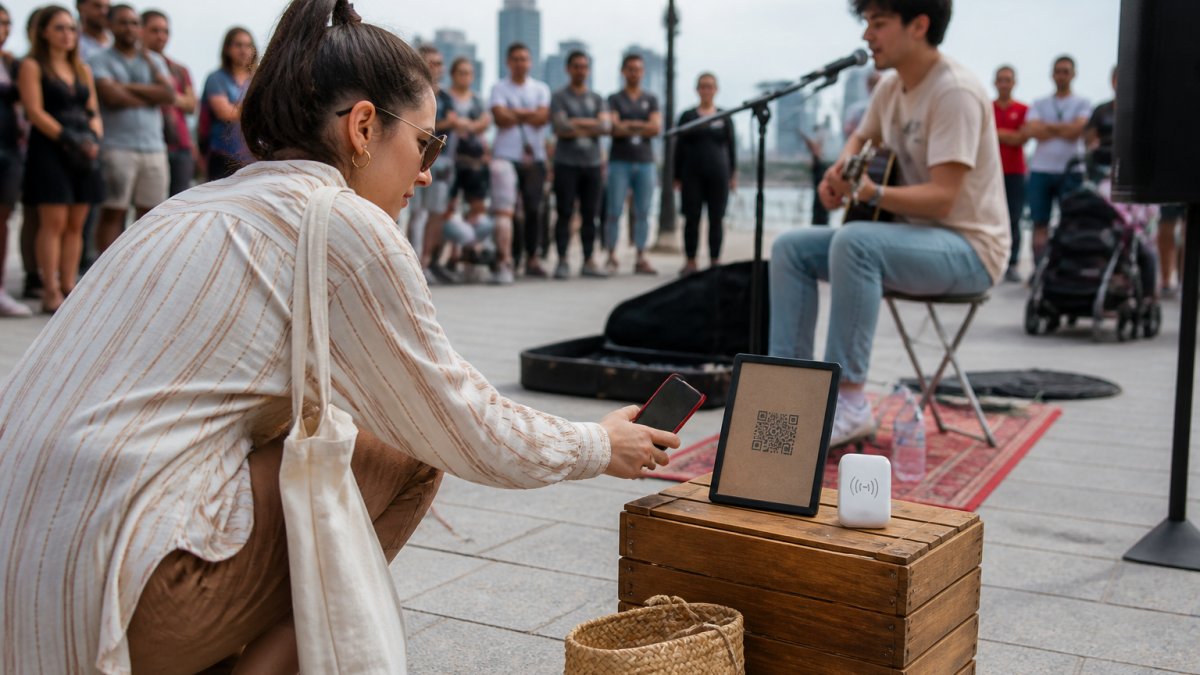
My Fedora's official support QR opens the artist's online checkout. Halo Pulse offers a compatible smartphone NFC/QR route to that checkout. Neither action automatically follows the artist, subscribes someone to a mailing list or turns a payment into an ongoing relationship.
If your priority is audience growth, make your artist name and profile address visible alongside the support option. If you create a separate QR for your profile, label it clearly so people can distinguish it from the support QR.
3. Make a short, useful invitation at live performances
Choose a natural pause and explain one next step. A specific reason to follow gives people more information than a list of handles.
For example: “Thanks for stopping! If you'd like to hear the full version of that song, my artist name and profile link are on the sign.”
Or, when you have a confirmed date: “I'm playing here again on Saturday afternoon. You can find the details on my profile.”
Keep the invitation brief enough that it fits your act. Thank people who stop even if they do not follow or tip. Recognition and conversation can be welcome, but avoid putting individuals on the spot or calling out their contribution publicly without asking.
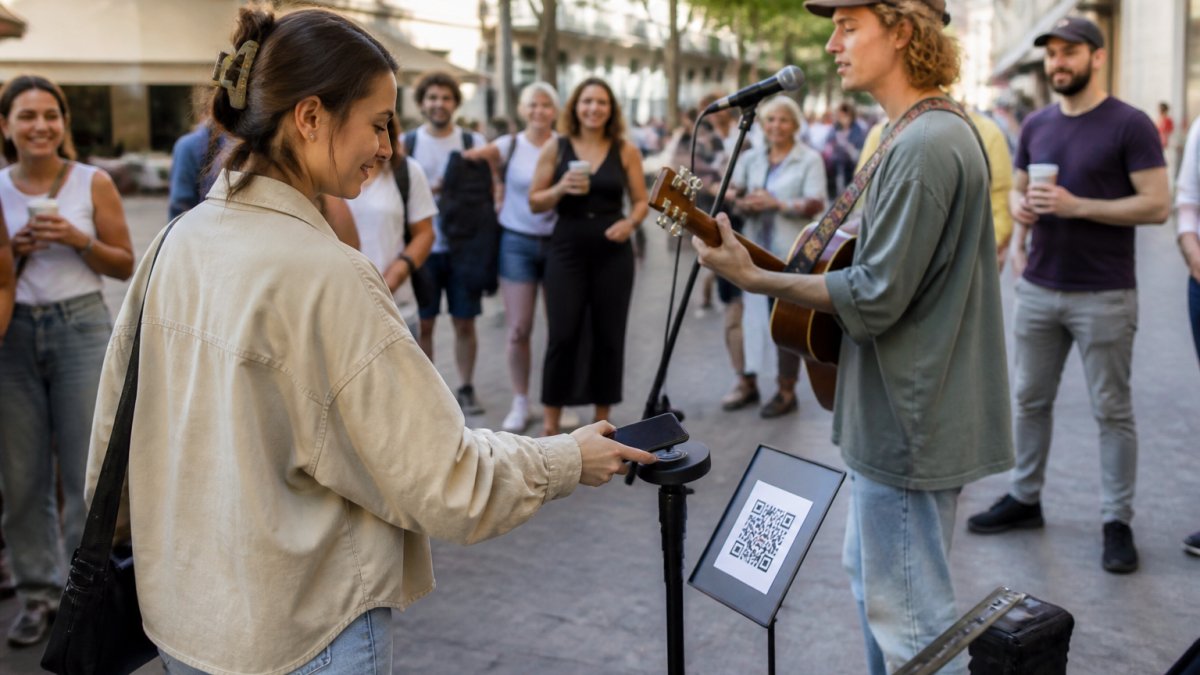
Position signs where they can be read without blocking foot traffic or interrupting the performance. Test what each QR opens before you start. Our guide to displaying QR codes at live performances covers the practical setup.
4. Publish a recognisable series you can sustain
Instead of inventing a new concept for every post, choose one or two repeatable formats that suit your work:
- A performance excerpt with the song title and your artist name.
- A short explanation of how you wrote a lyric or built an arrangement.
- A rehearsal update showing what changed between two versions.
- A confirmed gig announcement with the location, date and useful details.
Try two posts a week as a starting experiment if that fits your workload. It is a planning choice, not a universal growth rule. Adjust when you see how much time it takes and how your audience responds.
YouTube's audience guidance recommends consistent topics or formats, series based on audience interests and community interaction. It does not prescribe a single posting quota for every artist.
Use clear sound and enough context for someone who has never seen you perform. Polished clips and informal footage can both be useful; neither format is guaranteed to travel further. Add readable captions where appropriate, and get permission before featuring identifiable audience members prominently, especially children.
5. Respond and collaborate without turning every exchange into promotion
Reply to genuine questions when you can. If listeners keep asking for the name of a song, make a post that answers it and link to the full version. That gives the next person useful information too.
There is no need to build your day around a supposed first-hour deadline. Focus on thoughtful replies and a routine you can maintain.
For collaborations, look for another performer whose work complements yours. Agree on a small project: a joint performance clip, a shared bill or a song swap. Confirm the credits, where each person will share it and any permission needed before publishing.
The point is to introduce audiences to work they may enjoy. A collaboration is an experiment, not a promise that followers will transfer from one account to another.
6. Offer updates people choose to receive
A mailing list can give interested listeners another way to hear about your work. Make the sign-up voluntary and explain what you plan to send, such as occasional release news and confirmed gig dates.
Use a separate sign-up form with a clear way to unsubscribe. Do not add someone simply because they tipped, left a comment or gave you contact details for another purpose. Use a mailing service suited to your needs; do not assume an artist-profile or payment platform includes newsletter tools.
A useful update can be short: one piece of news, a clip or song link, and one next step. Avoid sending messages just to fill a schedule.
7. Measure returning interest as well as reach
A high-view post tells you people saw something. It does not, by itself, show that they will seek out your next performance.
Pick a few measures available in the tools you actually use:
- Profile visits and follows after a performance or post.
- Listeners saving a track or returning to your channel.
- Voluntary mailing-list sign-ups.
- People mentioning an earlier set or bringing a friend.
- Enquiries about a future performance.
YouTube distinguishes new, casual and regular viewers, helping creators examine audience behaviour beyond subscriber totals. Spotify for Artists also provides streams, saves and audience information. Use the measures relevant to your work rather than expecting every platform to report the same thing.
Compare similar periods and make a note of what you published or where you played. With a small audience, a single enthusiastic listener can move the numbers noticeably. Look for repeated patterns before deciding a tactic works.
A simple four-week fan-base plan
This is a trial routine to adapt around rehearsals and performances, not a timetable for guaranteed results.
Week | Practical action | What to check |
|---|---|---|
1: Be findable | Update your profile, choose one strong clip and test your signs and links. | Can a new listener identify you and find your work on a phone? |
2: Invite | Try one brief invitation during a natural pause in each set. | Do people understand where the link goes? |
3: Give a reason to return | Share another instalment of your chosen format or a confirmed gig update. | Do listeners return, ask questions or save the work? |
4: Review | Compare your available figures and audience feedback. | Which action was useful enough to repeat, and what needs simplifying? |
Make support easy while keeping the choice clear
My Fedora gives performers a free artist profile and official support QR. The profile can present your story, work and social links; the support QR takes a supporter directly to online checkout.
Halo Pulse is an optional smartphone NFC/QR access point, not a bank-card reader. The supporter's phone needs internet access to complete payment. Halo Pulse does not store card details or create offline transactions.
My Fedora deducts 0% from the selected artist-support amount. Ordinary payment-provider fees may apply. A separate contribution to My Fedora is optional and unchecked by default. You can download your QR through a free account, but must connect a supported payment provider before receiving payments.
Create your free My Fedora artist profile and get your support QR. Then give listeners a clear invitation to discover more of your work as well as a clearly labelled way to support it.
Frequently Asked Questions
How can I grow a fan base without paying for ads?
Start with a clear artist identity, an up-to-date profile and a useful invitation at performances. Share work regularly at a pace you can sustain, respond to interested listeners and test suitable collaborations. These actions can help people discover and return to your work, but do not guarantee growth.
How often should an independent artist post?
Choose a routine that leaves time for making and performing your work. Two posts a week can be a starting experiment, then adjust to your capacity and audience response. There is no universal posting frequency or first-hour reply rule that guarantees growth.
Does scanning a My Fedora support QR follow the artist?
No. The official support QR opens the artist's online checkout. Halo Pulse also provides a smartphone NFC/QR route to checkout. Following a social account or joining a mailing list is a separate, voluntary action. Label profile and support links clearly.
What should I track when my audience is still small?
Review a few relevant measures, such as profile visits, follows, saves, returning viewers, voluntary sign-ups and repeat attendance. Compare similar periods and note what you did. Small numbers fluctuate, so look for repeated patterns rather than judging the whole strategy from one post.