 how-to
Can Buskers Avoid Transaction Fees on Digital Tips?
Updated 25 October 2026
A free tipping account does not necessarily make every tip free to process. For buskers, avoiding transaction fees starts with separating platform charges, payment-provider fees and equipment costs—and comparing the amount that actually reaches your account.
You can choose a service without a subscription or platform deduction, and you may be able to avoid buying payment hardware. Ordinary payment-provider fees can still apply. Cash avoids digital processing, while bank-transfer costs depend on the accounts and service involved. There is no single fee rule covering every way a supporter can pay.
Which tipping costs can you avoid?
- Subscriptions: choose a service with no recurring account charge if its features meet your needs.
- Platform deductions: check whether the platform takes a share of the selected support amount, separately from processing.
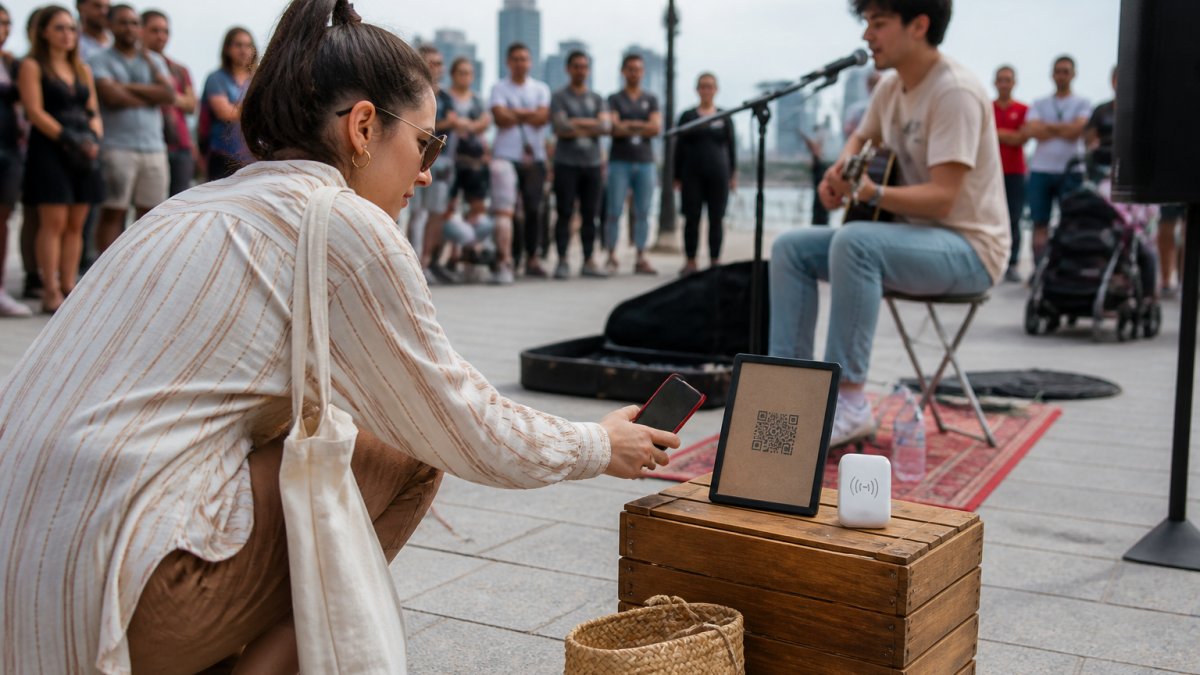
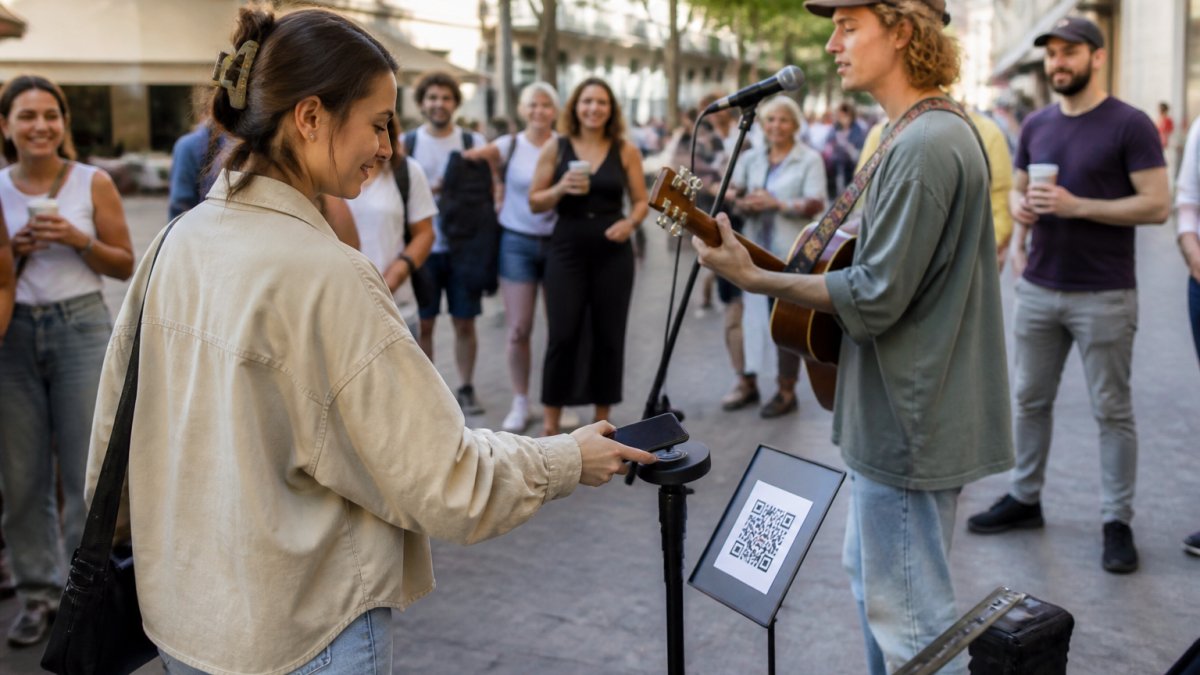
- Hardware: a printed QR code can give supporters an online payment route without buying a card terminal. Printing still has a cost.
- Processing: compare the provider agreement for your country and account. Do not assume these charges disappear because the QR or account is free.
- Other charges: look for currency conversion, international-payment, payout, refund and dispute costs where applicable.
Compare the complete setup you will actually use. An inexpensive reader with a monthly plan can cost more over a quiet month than a setup with a higher per-payment rate and no subscription. The reverse can be true at higher volume.
Why small tips feel expensive to process
Some fee schedules combine a percentage with a fixed amount per transaction. The percentage scales with the payment; the fixed component takes a larger share of a small tip.
For illustration only, suppose a provider charged 2% plus A$0.30 per payment. These are invented figures to explain the calculation, not a quote from My Fedora or any provider.
Support amount | Illustrative fee | Amount after fee | Fee as a share |
|---|---|---|---|
A$2 | A$0.34 | A$1.66 | 17% |
A$5 | A$0.40 | A$4.60 | 8% |
A$10 | A$0.50 | A$9.50 | 5% |
A$20 | A$0.70 | A$19.30 | 3.5% |
The calculation is: support amount × percentage rate + fixed fee. Actual providers may use different rounding, categories or additional charges.
Do not interpret this as a reason to discourage small contributions. A small tip can still be welcome. If your checkout offers suggested amounts, keep the choice clear and voluntary rather than pressuring supporters to cover costs.
How to compare payment costs before your next set
1. Use your real tipping pattern
List how many tips you expect, their typical size and your likely monthly total. A fixed fee depends on transaction count, so comparing rates against total income alone can hide the cost of many small payments.
2. Check the correct country and payment category
Read the provider's current official fee schedule and the agreement applying to your account. Domestic, international and currency-converted payments may be priced differently. A reduced charity rate or a personal transfer rate is not automatically available to a street performer.
For example, PayPal's Australian merchant-fee page distinguishes payment categories and additional charges. Use the applicable category rather than a headline rate copied from another country or account type.
3. Add recurring and equipment costs
Include subscriptions, optional paid features and equipment you genuinely need. If a printed QR meets your needs, dedicated hardware is a choice rather than an unavoidable starting expense. If you prefer a terminal, assess its full cost and practical value for your pitch.
4. Compare statements with your estimate
After a few sessions, compare gross support, provider charges and net receipts in your payment records. Check pending payments and refunds separately. A provider balance, a payout to your bank and the original tip are different entries; avoid counting them as three sources of income.
For a broader setup checklist, see our guide to accepting digital tips without subscription fees.
What My Fedora's 0% platform fee means
My Fedora deducts 0% from the selected artist-support amount. Ordinary payment-provider processing fees may apply under the artist's provider agreement. A separate contribution to My Fedora is optional and unchecked by default; it is not required to support the artist.
Your account, artist profile, official QR and poster downloads are free, with no subscription. You can obtain the QR before finishing your setup, but you must connect the supported payment provider for your country before receiving payments. Printed products and Halo Pulse are optional purchases.
The regional provider processes payments through the artist's connected account and manages payouts. My Fedora creates the checkout; it does not pool artist support in its own merchant account or store complete card or bank-account details. See My Fedora's payments, fees and refunds explanation and terms of use for the account and payment details.
QR and Halo Pulse do not remove processing fees
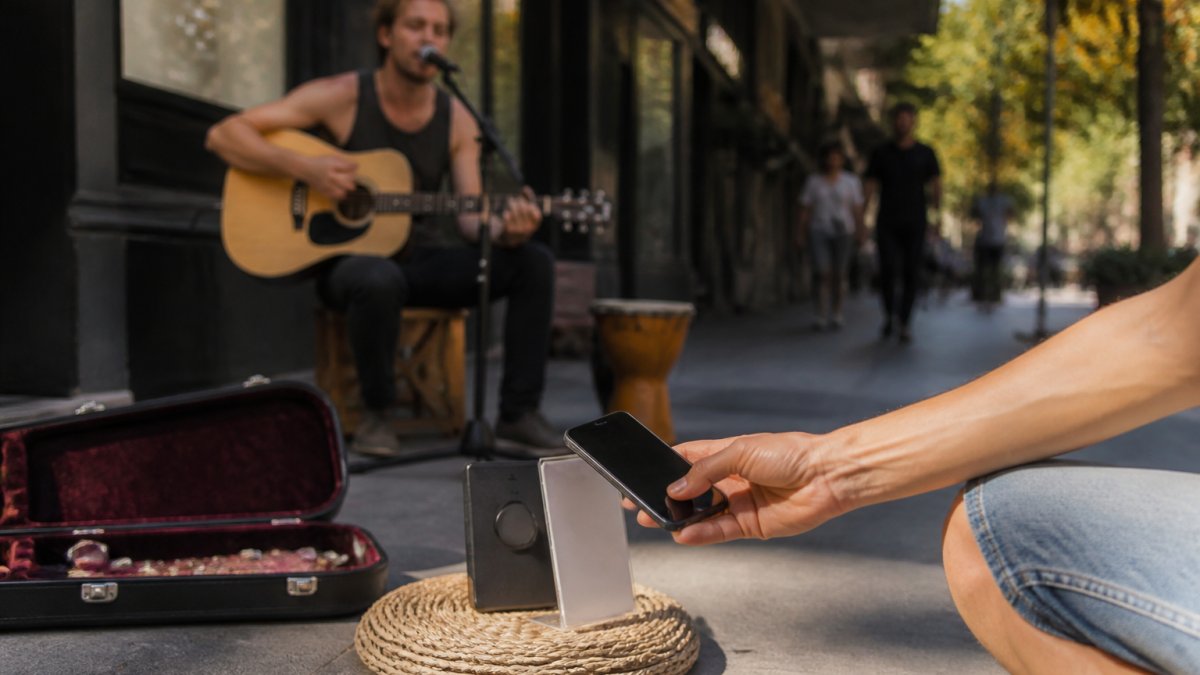
An official support QR opens the artist's online checkout. Halo Pulse provides a smartphone NFC/QR access point to that checkout. It is not a bank-card reader: supporters use a compatible smartphone, and their phone needs internet access to complete payment.
Halo Pulse does not store card details or create offline transactions. Changing how someone reaches checkout does not, by itself, eliminate the provider's charges.
Should you keep cash or offer bank transfers?
A small, secured cash option can complement digital support. Cash needs no internet and incurs no digital payment-processing fee, but you still handle counting, records, security and any relevant banking costs.
A bank transfer may have different costs from a card payment. Confirm your bank's terms, the details supporters will see and the experience of completing a transfer. Do not advertise every bank transfer as universally free or instant, and do not treat a screenshot as proof that funds have arrived.
Choose methods that suit your audience as well as your budget. A cheaper method is less useful if people cannot understand or complete it during a performance.
Can Australian buskers add a card surcharge?
Do not rely on older advice saying a card surcharge is allowed as long as it matches your costs. The ACCC's current guidance says businesses can no longer add surcharges for Visa, Mastercard, American Express or eftpos card payments from 1 October 2026.
This is about card-payment surcharges; it does not mean providers stopped charging merchants. Check your provider settings and current official guidance before changing checkout charges. Do not relabel a required card fee as an optional contribution.
Build a tipping setup you understand
The practical goal is transparent costs and a straightforward way to support your act. Start with a free account and QR, connect your provider, check the relevant fees and review what reaches your account after real performances.
Get your free My Fedora artist QR and give supporters a direct route to online checkout. My Fedora deducts 0% from selected artist support; ordinary payment-provider fees may apply, and any separate contribution to My Fedora is optional and unchecked.
Frequently Asked Questions
Can buskers avoid all transaction fees?
Not across every payment method. A service without a subscription or platform deduction can reduce costs, but ordinary payment-provider fees may apply. Cash avoids digital processing fees, and bank-transfer costs depend on the accounts and service used. Compare the terms for your actual setup.
Does a free My Fedora QR mean fee-free payments?
No. My Fedora charges no subscription for the account, profile, QR or poster downloads and deducts 0% from the selected artist-support amount. Ordinary provider fees may apply. A separate contribution to My Fedora is optional and unchecked by default. Connect a supported provider before receiving payments.
Can I add a card surcharge to recover processing costs?
The ACCC says Australian businesses can no longer add surcharges for Visa, Mastercard, American Express or eftpos card payments from 1 October 2026. Processing costs can still exist. Check current official guidance and provider settings rather than relying on older cost-of-acceptance advice.