 how-to
12 Practical Tips for Street Performer Fan Engagement
Updated 8 October 2026
The most useful tips for street performer fan engagement are straightforward: make your act welcoming, make your name easy to remember, and give interested listeners a clear way to find you again.
Someone might stop for one song, join a chorus, leave a tip or follow your music later. Those are different kinds of engagement. None is guaranteed, and a person who simply enjoys the performance is still a valued audience member.
This guide covers practical things to try before, during and after a set, including how to explain your QR code and Halo Pulse without confusing a support checkout with an artist profile.
Prepare a Setup That Welcomes an Audience
1. Choose a suitable place to stop and listen
Look for an approved performance space with room for both an audience and people passing through. Busy foot traffic alone does not make a good pitch: people need somewhere comfortable to watch without blocking entrances, crossings or accessible routes.
Check the current requirements for your exact location before setting up. The City of Melbourne’s Busking Handbook, for example, addresses audience management and pedestrian access. A location that suits one act may not suit a larger crowd or a different performance type.
Position your equipment and signs so listeners can approach without stepping through cables or entering your performance space. Reassess that layout if a crowd grows.
2. Make your artist name visible
Display the same artist name you use online. A passer-by should be able to read it without waiting for an announcement or interrupting a song.
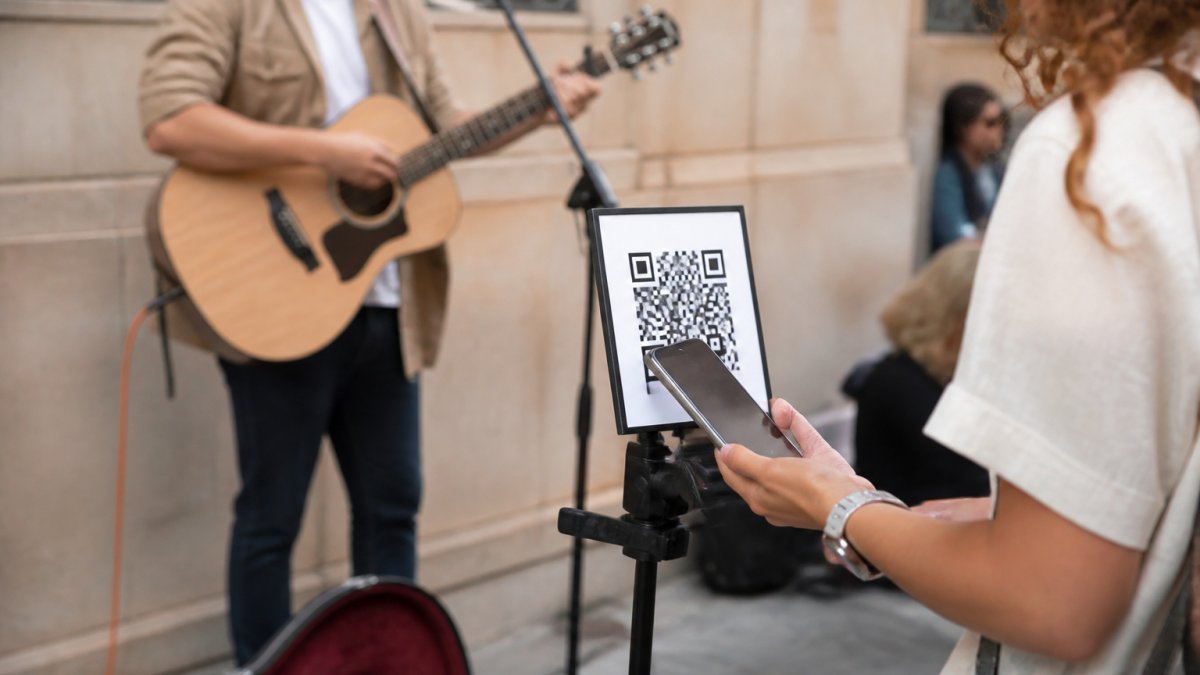
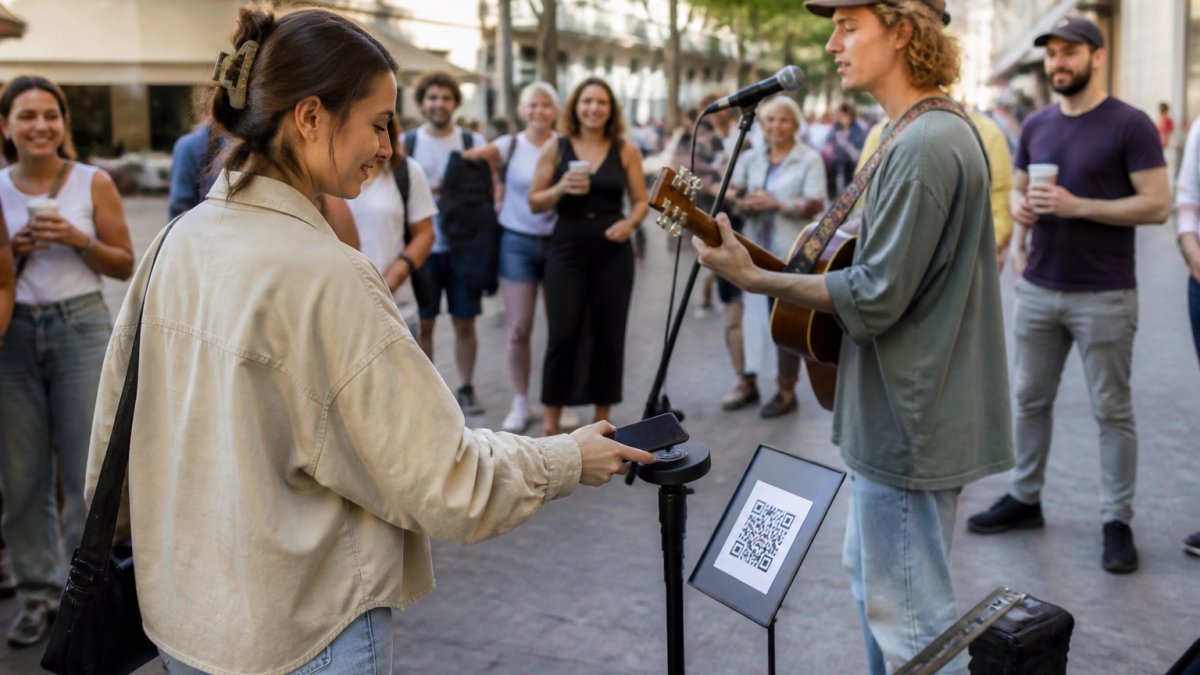
Give each sign a clear purpose. Your support sign can say “Enjoying my set? Scan to support.” A separate profile address or social handle can say “Find my music and upcoming appearances.” Avoid placing several unlabelled QR codes together and making people guess.
3. Test what your audience will open
Scan the printed code from a realistic viewing distance and follow the link on a phone using mobile data. Check the artist identity, destination and available next step. Repeat the test whenever you replace a sign or change a link.
On iPhone, a supporter can use Camera or Code Scanner, frame the code and tap the displayed link, as explained in Apple’s QR scanning instructions. Keep your code clear, well lit and free from glare.
A scan is only the start of the journey. It does not mean someone has followed you or completed a payment.
Engage People During the Performance
4. Open with something you can deliver confidently
Choose an opening that represents your act and works in the space. That might be a recognisable chorus, an original song with a strong opening, a visual routine or a quieter piece that suits the setting.
There is no universal rule that every busker must begin loudly or win a crowd within thirty seconds. Prepare your equipment beforehand where possible, then give the performance a clear beginning.
5. Acknowledge people without putting them on the spot
A smile, nod or brief thank-you can welcome someone who stops. You do not need constant conversation, and you do not need to make every passer-by participate.
Let people arrive, listen and leave comfortably. Avoid calling out someone for walking away, declining to tip or not joining in. People may be short on time, money or social energy.
6. Offer one easy participation idea
Choose something that fits your act and can be done from where people are standing:
- Offer two songs and let listeners choose.
- Invite a familiar chorus or a simple clap rhythm.
- Use a short call-and-response.
- Ask a light question connected to the next piece.
Make participation optional. If nobody responds, carry on warmly instead of repeating the request until someone gives in. For acts involving volunteers, explain what participation involves and give people an easy way to decline.
7. Keep between-song chat purposeful
Use a brief introduction, a detail about the next song or a thank-you. Adapt these examples to your own voice:
Purpose | Example |
|---|---|
Introduce yourself | “Morning, I’m Alex. Thanks for stopping to listen.” |
Introduce an original | “This next one is a song I wrote about moving to a new city.” |
Invite participation | “Would you like the acoustic one or something a bit louder next?” |
Explain support | “If you’d like to leave a tip, scan the support QR beside me with your phone. Thank you!” |
Help people find you | “My artist name and profile address are on the sign if you’d like to hear more.” |
You do not need to deliver every line in every break. Space announcements around natural pauses and changes in the audience. Keep the performance central.
Make Digital Support Easy to Understand
8. Match the sign to the destination
A QR code can direct someone to a profile, a recording or a checkout, depending on the link it contains. Label the actual destination.
My Fedora’s official support QR opens the artist’s online support checkout directly. It should be described as a way to support the artist. For listeners who want to explore your music or social links, share your artist profile address separately.
Scanning a support QR does not automatically create a follow, subscribe someone to updates or turn a tip into an ongoing relationship. Give interested listeners a clear invitation to take those next steps themselves.
9. Explain Halo Pulse as a phone tap
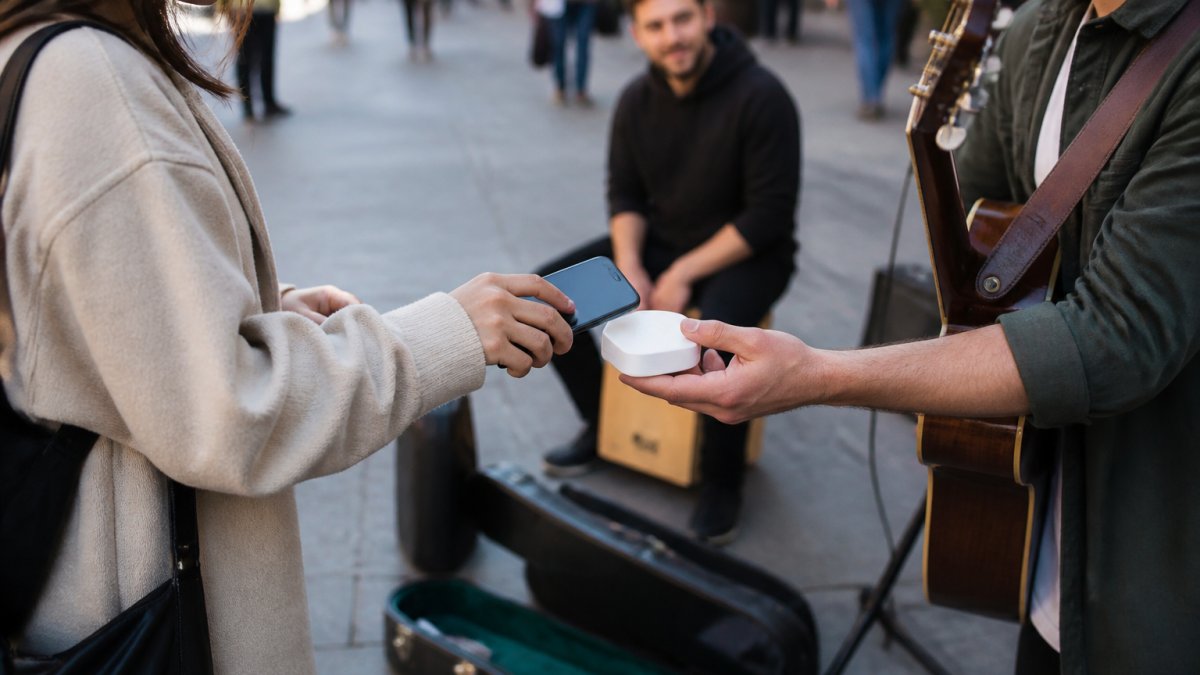
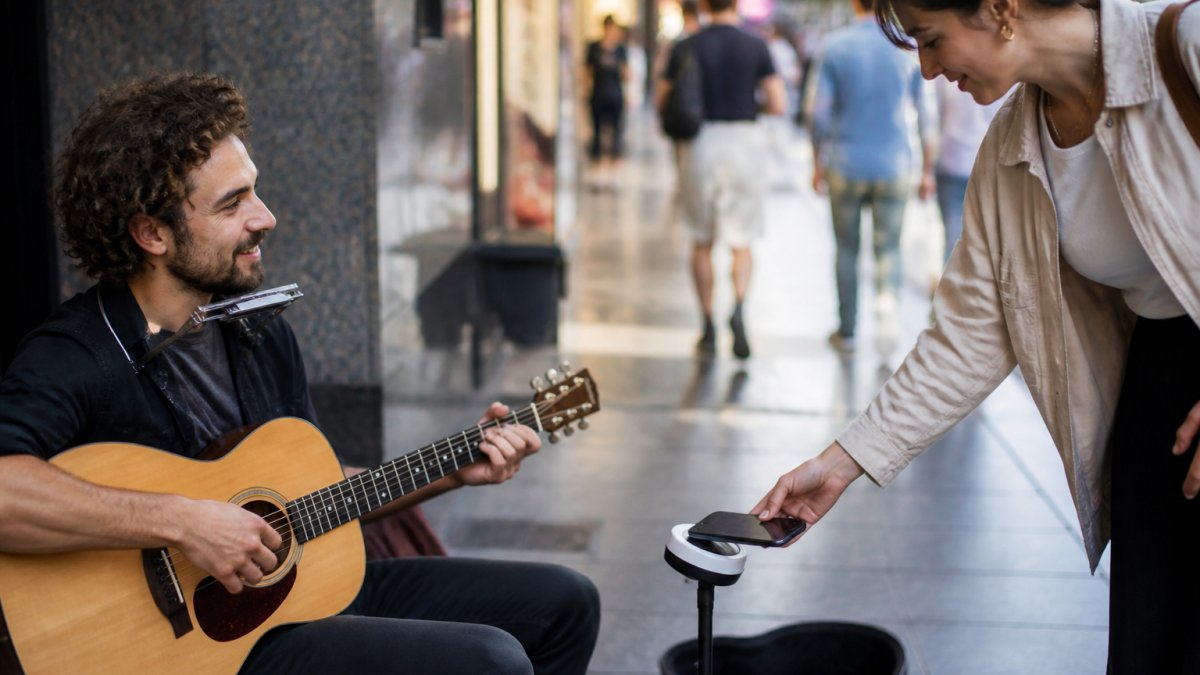
Halo Pulse is a smartphone NFC/QR tap-to-support access point. A supporter taps it with a compatible smartphone or scans its QR code, then opens the artist’s online checkout.
- It is not a bank-card reader or EFTPOS terminal.
- The supporter’s phone needs internet access to load checkout and complete payment.
- Mobile data can provide that connection; venue Wi-Fi is not required.
- Halo Pulse does not store card details or create or queue offline transactions.
A useful instruction is: “Tap with your phone or scan to support.” If there is no internet connection, a supporter can save your details for later, but that is not a completed tip.
My Fedora deducts 0% from the selected artist-support amount. Ordinary payment-provider fees may apply. Any additional supporter contribution to My Fedora is optional and unchecked by default.
Give Listeners a Reason to Return
10. Keep your artist profile useful
A recognisable photo, short introduction and working music and social links help someone connect the performer they saw with the person they find online. Review your profile on a phone and remove outdated information.
Share confirmed upcoming appearances through the channels you use. If a street performance depends on weather or location availability, make that uncertainty clear rather than promising an exact appearance you cannot guarantee.
11. Continue the conversation respectfully
After a set, consider posting a short performance clip, a thank-you or a note about the next appearance. Respond to comments when you can. Ask permission before using someone’s identifiable close-up or testimonial in promotional material, and be especially considerate around children.
If you offer email updates, use a separate, clear signup invitation. Do not treat a tip or access to payment contact details as a request to receive marketing.
12. Change one thing and observe the response
Try a clearer sign, a different opening or a shorter announcement across several sessions. Note what happens before changing everything again.
Useful observations include people asking your name, staying for another song, mentioning a previous performance or choosing to follow you. You can also review visits, follows and completed support payments where your chosen services provide those records. These measures describe different actions; a scan count is not a payment count.
Weather, location, foot traffic and timing all affect a session. Treat a single good or quiet day as an observation, not proof that one change caused the result.
A Simple Checklist for Your Next Set
- Check the location’s requirements and leave clear pedestrian access.
- Display a readable artist name and clearly labelled support sign.
- Test your QR code, NFC link and online checkout.
- Prepare a confident opening and one optional participation idea.
- Use a short, accurate support announcement.
- Make your profile or social handle easy to find separately.
- Thank listeners and note one thing to improve next time.
Make Your Next Performance Easier to Follow
You do not need a complicated routine to start building a returning audience. Give people a performance they can enjoy, a name they can remember and a clear way to stay connected.
My Fedora brings your artist profile and digital support tools together. Use your profile to introduce your work, your official support QR to open checkout, and Halo Pulse as an optional smartphone tap-to-support access point.
Explore My Fedora and create your artist profile.
Frequently Asked Questions
How do street performers get people to stop and watch?
Choose a suitable performance space, display your artist name and open with a piece you can deliver confidently. Acknowledge people who pause and make it comfortable to watch. The best approach depends on your act and location; no opening guarantees a crowd.
How can a busker make a crowd feel involved without making anyone uncomfortable?
Offer a simple, optional activity such as choosing between two songs, joining a chorus or clapping a rhythm. Let people participate from where they are standing and accept a quiet response without pressure. Watching should be welcome on its own.
How can a QR code for musicians help build a loyal audience?
A QR code opens the destination encoded in it. My Fedora’s official support QR opens the artist’s online support checkout directly. Share your artist profile address separately for music and social links. Scanning or tipping does not automatically follow an artist or subscribe the supporter to updates.
How long should a busking set be?
There is no single ideal length for every busker. Plan around the conditions for your pitch, your act, your voice or physical stamina, and the audience. Include appropriate breaks and follow any local time limits or rotation requirements.